
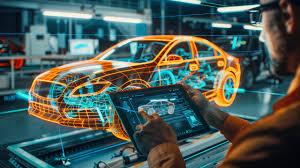
Artificial Intelligence (AI) is making profound impacts across many industries, and the automotive sector is no exception. With technological advancements happening at an unprecedented pace, AI has become a central player in shaping the future of vehicles, from enhancing safety features to enabling autonomous driving. The integration of AI in the automotive industry has created new opportunities for innovation, transforming both the consumer experience and manufacturing processes. This article explores www.autonocion.com/motornocion/ how AI is revolutionizing the automotive industry and its positive implications for the future.
How is AI Enhancing Vehicle Safety?
One of the most significant contributions of AI to the automotive industry is the enhancement of safety features. Advanced Driver Assistance Systems (ADAS) are becoming increasingly common in vehicles, with features like lane-keeping assistance, collision avoidance, and automatic emergency braking powered by AI technologies. These systems use real-time data from sensors, cameras, and radar to detect potential hazards and help prevent accidents, providing an extra layer of security for drivers and passengers.
AI-powered systems can also predict and react to dangerous driving conditions. By analyzing large amounts of data in real-time, AI can recognize patterns, such as when a driver is drowsy or distracted, and issue timely warnings. The ongoing development of these technologies is gradually reducing the risk of human error on the road, making driving safer and more reliable.
How is AI Transforming Autonomous Vehicles?
The most transformative application of AI in the automotive industry is in the development of autonomous (self-driving) vehicles. Self-driving cars rely heavily on AI algorithms to interpret data from sensors and cameras, allowing them to navigate roads, detect obstacles, and make driving decisions without human intervention. AI’s ability to process and respond to vast amounts of information in real-time is essential for the safe and efficient operation of autonomous vehicles.
Machine learning, a subset of AI, allows these vehicles to continually improve their driving performance by learning from experience. As autonomous vehicles encounter different traffic scenarios, weather conditions, and road types, they gather data that helps refine their algorithms, making them smarter and more capable over time.
What Are the Benefits of AI in Manufacturing?
AI is not only revolutionizing the end-user experience but also improving the way vehicles are designed and manufactured. In automotive production, AI-driven automation and robotics are streamlining processes, improving precision, and reducing human error. AI can assist in assembly line operations by monitoring the quality of parts, ensuring that every component meets high standards before being integrated into the final product.
Additionally, AI is being used to optimize supply chains and inventory management, predicting demand for specific vehicle models and parts. This reduces production delays and ensures that the manufacturing process is as efficient as possible, ultimately lowering costs for manufacturers and consumers alike.
How is AI Improving In-Car Experiences?
Beyond the technical and safety aspects, AI is enhancing the overall in-car experience. Voice assistants, powered by AI, are becoming standard in many vehicles, allowing drivers to control music, navigation, climate, and other systems without taking their hands off the wheel. These AI systems are becoming more intuitive and responsive, understanding natural language commands and adapting to the preferences of individual users.
AI is also being integrated into infotainment systems, offering personalized content based on driving habits, location, and preferences. For instance, the system might suggest the best route to take based on current traffic conditions, or recommend a playlist based on the driver’s musical tastes. This personalization improves convenience, making the driving experience more enjoyable and efficient.
What Does the Future Hold for AI in the Automotive Industry?
As AI continues to evolve, its role in the automotive industry is expected to expand dramatically. We are likely to see the integration of more advanced AI features in vehicles, including predictive maintenance systems that can alert drivers to potential issues before they arise. These systems will help reduce the risk of breakdowns and improve the longevity of vehicles.
In addition, the rise of smart cities will create new opportunities for AI to optimize traffic flow and reduce congestion. Vehicles equipped with AI will be able to communicate with traffic signals and other smart infrastructure, allowing for smoother journeys and more efficient use of roadways.
Looking ahead, AI is also expected to play a pivotal role in the development of fully autonomous vehicles. As machine learning algorithms continue to advance, self-driving cars will become safer, more reliable, and more accessible to the general public. This will mark a fundamental shift in how people interact with transportation and could pave the way for more sustainable, efficient, and connected transportation systems.
Conclusion
Artificial Intelligence is undeniably transforming the automotive industry, driving innovation and enhancing both the driving experience and vehicle safety. From autonomous driving to smarter manufacturing processes and personalized in-car experiences, AI is creating a future where vehicles are more intelligent, efficient, and safe. As technology continues to progress, the impact of AI on the automotive industry will only grow, providing exciting opportunities for both manufacturers and consumers. The future of transportation is intelligent, connected, and increasingly autonomous, thanks to the power of AI.
